
An online CNC machining service sells you convenience — upload a model, answer a few questions, get a quote, approve it, and parts arrive at your door without a single conversation. The convenience is real, but it relocates the risk into the parts of the transaction that used to be handled by people: the model handoff that must carry your intent, the automated analysis that decides manufacturability, the quote that must stay locked to your revision, the payment that must protect both sides, and the fulfillment chain that turns a remote order into parts on your bench.
Why does buying machining online change what you must verify?
In a traditional sourcing conversation, the supplier's engineer reads your drawing, asks about the features that matter, and the two of you agree on what is being built before the price is set. An online service replaces much of that exchange with automation: your model and your answers to a form are the entire brief, and whatever the automation did not understand is discovered later — at the quote, at the first article, or at your receiving dock. The verification therefore moves to the interfaces where intent can be lost: the upload, the form, the quote and the change process. A buyer who understands where the automation is strong and where it is blind can protect the parts of the order the system will not.
The second change is the distance between you and the people who matter. On a traditional order you can call the programmer who will run your part; on an online order the programmer is a name on a ticket, reachable through a message system if at all. That is not necessarily worse — a good online service has engineers who read every model — but it is different, and the verification must account for it. Ask who reviews your model, how long the review takes, and what happens when the reviewer finds a problem in your file. The quality of that human layer inside the automation is the real product you are buying.
What should you verify about the model upload and the file itself?
Before you pay anything, verify that the system received what you think you sent. Confirm the accepted formats and the units your file carries — the classic disaster is a model in millimetres uploaded to a system expecting inches, or a STEP file that arrives without its mate. Check the file for the features the automation needs to see: if the service works from a 3D model alone, confirm there is no information that only lives on your 2D drawing — a surface finish callout, a thread specification, a coating note that exists nowhere in the geometry. The upload page may promise to read your model; it cannot read the notes you did not include. The brief you fill in is the only place those intentions live, so put every non-geometric requirement there and keep a copy of the brief.
Ask what the service does with a model it cannot parse or a file that fails its checks. A mature service rejects the file early with a clear reason, before any money changes hands; a weak one accepts the file and discovers the problem later, when the fix is expensive. The service's file-validation behavior is your first signal about the whole ordering chain: a system that catches problems at upload is a system built to protect the order, and one that lets bad files through is a system that will let other problems through too. Verify the rejection path with a deliberately broken file if you can, because the system's behavior on a bad input predicts its behavior on a hard one.
How should you read the automated design-for-manufacturing feedback?
Most online services run an automated manufacturability analysis on your model and return flags — a wall too thin, a corner too sharp, a hole too deep, a feature that needs a process the service does not offer. Read those flags as engineering input, not as obstacles: each one is the service telling you how its process will handle your geometry, and the flags you ignore are the features you are knowingly shipping into a process that has warned you. Ask what the analysis covers and what it misses — whether it sees the feature that matters most on your drawing or only the geometry it was programmed to check. A service that is honest about its analysis limits is more useful than one that implies the analysis sees everything.
Watch how the flags affect the price. A flagged feature that needs a special tool or a slower process should appear in the quote as a cost driver; a flag that appears in the analysis but vanishes from the price is a warning the service has chosen not to honor. Ask how each flag on your model influenced the quote, and treat any feature the analysis warns about and the price ignores as a feature that will meet the process unannounced. The alignment between the DFM analysis and the price is the trust test of the automation: when the system warns and prices consistently, it is telling you the truth about its process; when they diverge, one of them is wrong and your part will find out which.
How do you verify that the quote stays locked to your revision?
The quote is a contract about a specific revision of your design, and the revision control around it is where online orders quietly go wrong. Confirm that the quote names the file it was generated from — the file name, the revision, the date — and that a later upload creates a new quote rather than silently changing the old one. Ask what happens if you revise the model after the quote: does the price update automatically, does an engineer re-review, and is the change recorded against the order? A service whose system tracks revisions cleanly is a service whose quote means something; one whose system accepts a new file without a new review is a service that will machine the new geometry against the old price.
Confirm, too, what the quoted price actually includes, because online quotes are built from a template and the exclusions hide in the fine print. Does the price include the material, the finish, the inspection report, the packaging and the shipping, or are some of those added later? Ask what generates a supplementary charge — a feature the analysis missed, a material the quote did not price, a finish that was an option rather than a default — and whether the service commits to the quote or reserves the right to revise it after review. A service that commits to its quoted price and states its inclusions is a service whose contract matches its marketing; one that revises freely after the card is charged is pricing your trust rather than your part.
What should you verify about payment, holds and dispute paths?
The payment mechanics of an online service are part of its trustworthiness, so read them before you pay. Ask how payment is taken and when: is the full amount charged at order placement, or is there a review point before production starts and before the balance is taken? Ask what the cancellation and refund policy actually says, and what happens if the parts arrive out of tolerance — is there a rework commitment, a refund path, or a dispute process that favors the party who wrote the terms? A service that holds payment until the first article is approved has aligned its incentives with yours; one that takes the full amount upfront has aligned its cash flow with its own.
Ask how you are told about problems after you have paid. The online order's risk point is the silent change: the service that discovers your model has an issue after charging, and resolves it by machining a different geometry or by adding a charge without asking, has broken the transaction's trust. Verify the service's policy for contacting you when the review finds a problem, and whether a problem pauses the order or proceeds past it. A service that pauses and asks is treating you as a party to the order; one that proceeds and informs is treating you as a source of payment. The two behave very differently when your part is the one with the problem.
What should the fulfillment side of the online order look like?
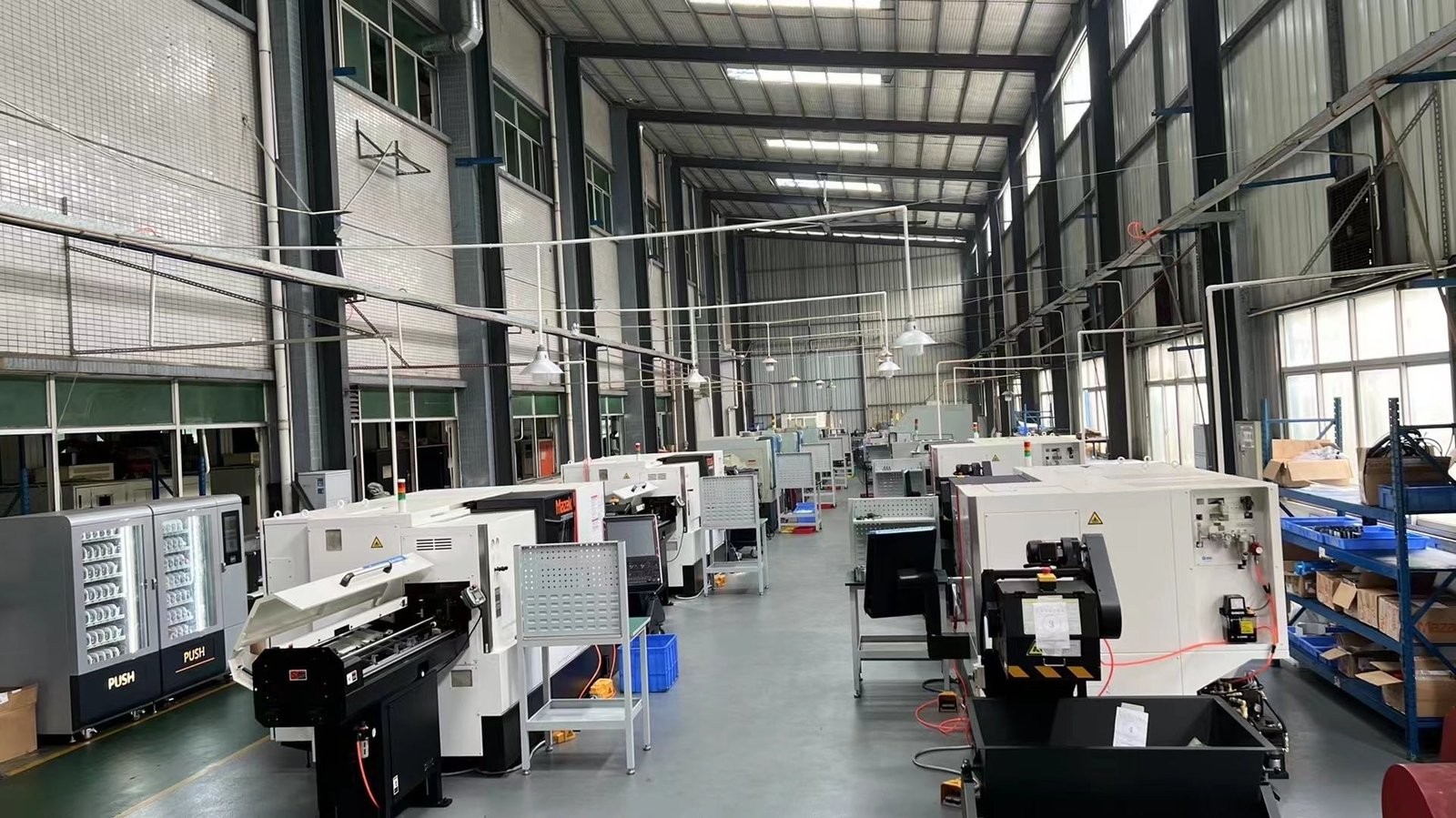
An online service is only as real as the floor behind the website, so verify that the fulfillment chain exists before you pay. Ask which factory runs the order, where it is, and whether the service owns the floor or forwards to a network, and ask what changes if your order is routed to a different factory than the one that quoted. Ask how the service inspects parts before shipping and what report accompanies the order, and confirm the report's format before the parts arrive rather than after. The inspection report is the one artifact that proves the remote order was actually machined to your drawing, and a service that cannot describe it before payment is a service that will struggle to produce it after.
Ask how the service handles the communication that a traditional supplier gives for free: the engineer's review notes, the reply when you ask about a feature, the update when your order moves from review to production to shipping. An online service that routes every question through a system but answers them with substance is preserving the engineering layer inside the automation; one that answers with templates has automated the answers along with the ordering. Send a technical question about your part before you pay and judge the answer — its specificity, its speed and its honesty — because that answer is the best preview of how the service will treat you when the order is in trouble.
Which quality and tolerance claims should an online service make verifiable?
The tolerance claim of an online service should be as concrete as any factory's: ±0.003 mm on milled and turned features and ±0.002 mm on precision ground surfaces, with process capability of Ppk ≥ 1.67 at the initial study on key characteristics at volume. Ask how the service reports capability on a repeat order and how it handles a tolerance its analysis flags as beyond its process — does it refuse the feature, warn you, or machine it and hope? The quality-system baseline is ISO 9001:2015, with IATF 16949:2016 (product design excluded) and ISO 14001:2015 alongside where the service serves regulated programs, and the certificate numbers and scope should be verifiable through the registrar, not just displayed on the website. Ask, too, how the service's quality system connects to its automation: whether the inspection plan is generated from your model's critical features or from a template that checks the same things on every part.
Ask for the artifacts that prove the quality story: a sample first-article report from a real order, a sample lot record, and the service's written policy for nonconforming parts. Read them the way the audit of any machining supplier would read them — are the numbers real, are the features the hard ones, is the record tied to a specific order? An online service that can show you these artifacts before you order is a service that treats its remote customers the way it treats its best accounts; one that cannot is asking you to accept its quality on the strength of its website, which is the one part of the operation it fully controls.
How should you structure the first order with an online service?
Treat the first online order as a controlled experiment whose purpose is to test the chain, not to save the maximum on the part. Send a part of moderate complexity with a few real requirements — a tolerance that matters, a finish callout, a material spec — and watch what the chain does with it: whether the DFM feedback matches the geometry, whether the quote locks to your revision, whether the review finds the notes you added to the brief, whether the payment is held to the right point, and whether the report that arrives proves the parts were measured. A first order designed as a test teaches you the service's behavior across every link at the price of one part; a first order designed only to be cheap teaches you nothing until the second order, when the surprise repeats.
Then scale the relationship the way the evidence allows. If the pilot order's report was real, its review found what you asked it to find, and its payment behavior matched its policy, the service has passed the chain test and the next order can carry more complexity and more volume. If any link failed — the report was smooth fiction, the review missed your note, the quote changed after payment — you have learned which link is weak, and you can either protect that link on future orders or take the volume elsewhere. The online ordering chain is not a single trust decision; it is a series of links, each tested in turn, and the buyer who tests the chain before scaling it is the buyer the automation serves rather than the one it surprises.
Frequently Asked Questions
What is the riskiest part of buying machining online?
The handoff of intent: the non-geometric requirements that live on your drawing or in your head must survive into the online brief, because the automation reads the model and the form, not the notes you did not include. Put every finish, tolerance and process requirement in the brief and keep a copy.
How do I protect my design revision against an online quote?
Confirm the quote names the exact file and revision it was generated from, and ask what happens if you upload a new model — a new quote and review, or a silent change. Revision control is where online orders quietly drift.
How should I read the automated DFM flags?
As engineering input from the service's process, and check that each flag shows up in the price. A flag that appears in the analysis but vanishes from the quote is a warning the service has chosen not to honor.
What should I check about payment before ordering online?
When the full amount is charged, whether there is a review point before production, and what the cancellation, refund and dispute policies say. A service that holds payment until the first article is approved has aligned its incentives with yours.
What tolerance should an online CNC service claim?
±0.003 mm on milled and turned features, ±0.002 mm on precision ground surfaces, and Ppk ≥ 1.67 at the initial study on key characteristics and Cpk ≥ 1.33 on general characteristics. Capability is reported per characteristic: every report names the feature, its tolerance band, the sample size, the sigma method, and the study window at volume. Ask how it reports capability and handles features its analysis flags as beyond process.
How do I verify the floor behind an online service?
Ask which factory runs the order, whether the service owns it or forwards to a network, and what happens if routing changes. Ask for a sample inspection report and the written nonconformance policy before you pay.
What should the first online order test?
The whole chain at low risk: DFM feedback accuracy, quote revision locking, review finding your notes, payment behavior and report realism. A pilot designed as a test teaches you the service across every link for the price of one part.
Want the ordering chain explained before your first charge?
Ask for the file-validation rules, the DFM flag list, the quote revision policy and a sample report through [email protected] or +86 13126536955. See the quality page for the inspection framework and the factory page for the floor that fulfils the online order.